
New Book Chapter Warns U.S. Civilian Leadership Is Unprepared for the Modern Embassy, and Lays Out a Practical Path Forward
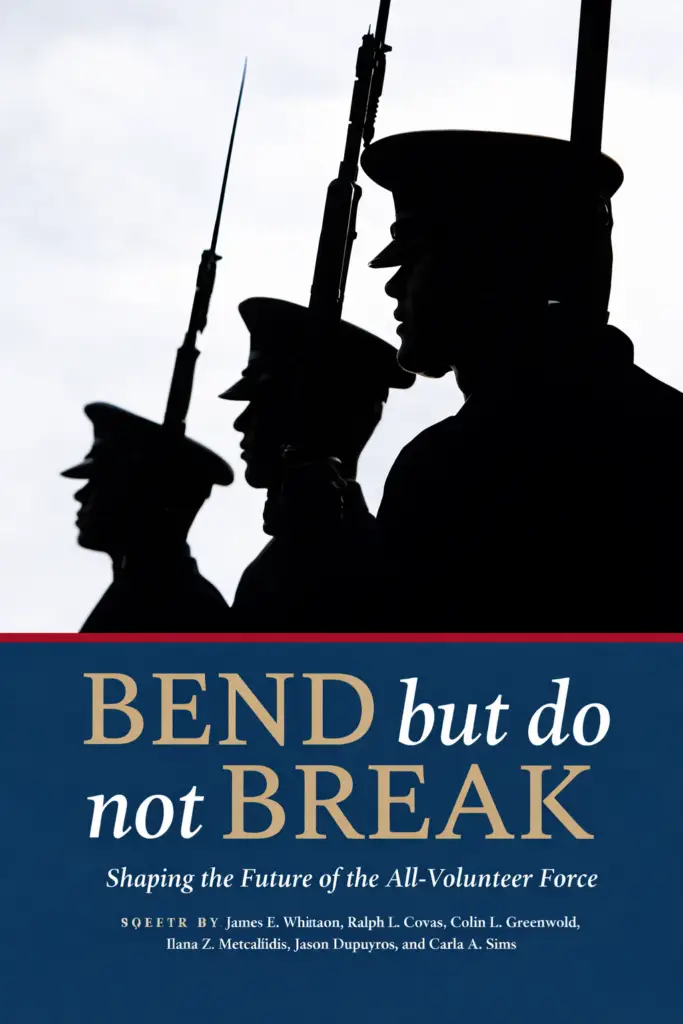
Washington, DC – A new chapter in Bend but Do Not Break: Shaping the Future of the All-Volunteer Force, titled, “Balancing Military Influence in National Security” argues that a growing gap between how U.S. embassies operate and how civilian leaders are trained has become a quiet but consequential weakness in American foreign policy.
Authored by Col. Todd Schmidt, Ph.D., and Amb. David C. Miller of the Diplomatic Studies Foundation (DSF), the chapter examines the modern U.S. embassy as it now functions: a complex, whole-of-government platform integrating diplomacy, intelligence, law enforcement, security cooperation, and economic engagement under Chief-of-Mission authority.
While this integrated model is now standard in strategically important countries, the authors argue that civilian preparation has not kept pace. Most civilian personnel deploy with little shared training in interagency authorities, country-team leadership, or coordinated campaign planning. As a result, embassy effectiveness often depends on individual experience rather than institutional readiness.
The chapter contends that this mismatch is not a failure of intent or resources, but of preparation. It identifies a readiness problem that weakens U.S. influence abroad by limiting the civilian leadership needed to direct increasingly complex missions.
Rather than calling for large-scale reorganization, the authors outline a set of practical, low-cost actions that could be implemented within existing authorities. These include standardized pre-deployment training for all civilians assigned to embassies, advanced leadership preparation for ambassadors and senior officials, recurring post-specific planning exercises tied to Integrated Country Strategies, and expanded cross-agency professional development that rewards effective interagency leadership.
“Embassies already function as integrated operational teams,” the authors write. “Civilian leaders should be trained and prepared accordingly.”
The U.S. Diplomatic Studies Foundation views the chapter as part of a broader effort to strengthen civilian leadership in national security through professional education and interagency fluency. In an era of sustained competition and persistent crisis, the authors argue, the ability of civilian leaders to integrate U.S. tools of statecraft at post is no longer optional – it is central to effective diplomacy.